Sunday, July 25, 2010

A Living Ghost of the Khmer Rouge


It is a simple caption: “Comrade Duch confesses to mass murder.”

For Nic Dunlop, who took the photograph in Cambodia in 1999, it was the culmination of years of obsession.

The man pictured, Kaing Guek Eav — more commonly known as Comrade Duch — was a senior official of the Khmer Rouge regime, during which 1.7 million people were killed outright or died as a result of torture, disease, overwork and starvation. Duch was responsible for the deaths of at least 14,000 people at Tuol Sleng prison in Phnom Penh. In the more than 30 years since the killings, he is the first senior member of the Khmer Rouge to be tried, facing a life sentence on charges of crimes against humanity and war crimes, in addition to homicide and torture.

A verdict in the case, before a United Nations-backed tribunal, is expected Monday.

All of it is the result of a chance encounter that allowed Mr. Dunlop to capture the confession on film.

Mr. Dunlop chronicled his story, and Duch’s, in the 2005 book, “The Lost Executioner: A Journey to the Heart of the Killing Fields,” which was translated into Cambodian and sold there in manuscript format. Mr. Dunlop, 40, lives in Bangkok and is represented by Panos Pictures.

Mr. Dunlop was born in Ireland. He was only 10 years old when the Khmer Rouge were driven from power. But as a teenager, he said, he was drawn to the tragedy of Cambodia. He was looking for context, and an answer to the question: Where do people like Comrade Duch come from?

Toward the end of the 1990s, Mr. Dunlop visited Cambodia a number of times. He began to carry a photograph of Duch in his pocket. While traveling with a mine-clearance team on a photo assignment in western Cambodia, he happened to encounter a small man who looked very familiar. Though he introduced himself as Hang Pin, Mr. Dunlop had few doubts about who it was.

Their first conversation, he said, was banal. Mr. Dunlop asked where he was from and what he had done for a living. “Of course, I didn’t ask him his real name then and there,” Mr. Dunlop said.

A few weeks later, Mr. Dunlop returned to the village of Samlaut with Nate Thayer, the last Western journalist to have interviewed Pol Pot, the leader of the Khmer Rouge. They arranged an interview with Duch, during which it appeared to dawn on Duch that they knew exactly who he was. That elicited what Mr. Dunlop calls “an extraordinary confession” in which Duch named names, traced the chain of command and expressed what seemed to be genuine remorse.

After the story of their meeting appeared in the Far Eastern Economic Review, Duch surrendered to authorities. But Mr. Dunlop’s reporting was not over. He sought to expand on Duch’s story. “It isn’t a cardboard cutout figure — a monster — at the end, but actually a wizened old man who appears to be contrite.”

Photography is a key theme in “The Lost Executioner.” Every person who was killed at the Tuol Sleng prison (code named S-21) had been photographed. “Photography was an integral part of identifying enemies and reducing them in the eyes of the Khmer Rouge,” Mr. Dunlop says in the book. Once prisoners were captured in the frame, they could never be anything but guilty in the eyes of their captor. It was “a kind of trial by camera.”

The images are displayed on the walls of the prison, which is now the Tuol Sleng Museum of Genocide.

“It’s so profoundly upsetting to stand in an empty room surrounded by thousands of pairs of eyes,” Mr. Dunlop said. “You know that all of those people who are looking at you are dead and may have died in that very room.”

In the book, Mr. Dunlop also reflects on how easy it is to lose sight of the humanity of the people one is photographing. He describes the process of editing pictures he had taken of a mortally wounded Cambodian soldier. “I realized that I had viewed him at the time as a series of aesthetic and technical calculations and judgments: the correct exposure that I wanted, the angle, the depth of field,” Mr. Dunlop writes. “Like the prisoners of S-21, people had become mere objects in my viewfinder.”

Therein, Mr. Dunlop said, was an important — and visceral — lesson.

“We should be careful about shutting off a greater understanding, which is vital,” he said. “I think it’s morally irresponsible and intellectually lazy if we simply brand people like this as monsters.”


Vann Nath holds his mug shot, taken when he was a prisoner of the Khmer Rouge. He was one of only seven people who survived incarceration in Tuol Sleng.


Saturday, July 24, 2010

Torrential rains shut down Milwaukee airport

Milwaukee’s General Mitchell International Airport re-opened to airline traffic on Friday afternoon after being forced to shut down Thursday evening due to torrential rains. Close to eight inches of rain was reported in just two hours last night, creating havoc with traffic in the Milwaukee area and forcing dozens of flights to be canceled or diverted elsewhere. All flights into and out of the airport were grounded on Thursday evening and Friday morning. The airport is a major hub for both Midwest/Frontier Airlines who recently merged, as well as AirTran Airways. Flights between Milwaukee and the Twin Cities, including those operated by Delta Air Lines, AirTran and Midwest Airlines, were among those canceled.

One runway at MKE became operational about 1 p.m. on Friday afternoon and work crews were attempting to clear flood waters and the resulting debris from the other runway so that it too can be utilized. Weather forecasters are calling for another evening of very heavy rains tonight with the possibility of up to five more inches of rain.

Many travelers were stranded at the airport terminal overnight Thursday, and again on Friday morning they were frustrated to learn that the airport wasn’t yet operational. A severe thunderstorm and flood is in effect for southeastern Wisconsin tonight and into Saturday, with the showers and thunderstorms not expected to be completely done with before perhaps 6 p.m. on Saturday evening.

A check of the Mitchell Airport website on Friday afternoon showed some flights operating on-time, a large number with delays of one to three hours, and still maybe one-in-ten cancelled.

Monday, July 19, 2010


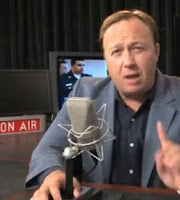
Obama Deception Censorship Update – Alex Jones had released his official statement at Infowars.com regarding the alleged censorship of his movies, “Obama Deception” and “Fall of the Republic.”
Yesterday we have reported about the giant leap in the viewership of the movie Obama Deception where it hit beyond the six million mark. Earlier today we received reports that Obama Deception was censored. The admin of the YouTube Channel, ChangeDaChannel already released his official reaction.
We manage to get a new link on the Obama Deception censored video (accessible here) and although I personally believe that this is more of a far-fetched theory and beyond reality we still invite people to make their own judgement.
Apparently it was not only the movie that was censored but Alex Jone’s Facebook pages had also been removed, as well as websites which exhibited the Tea Party flag and logo. Whether this was really done by Facebook over that fact or for some other issue they still have to make their comment on the allegations.
Here is the official statement of Alex Jones over Obama Deception censored video and also the censorship of Fall of the Republic.
Where these true or just fabricated? Did they delete the video and accounts themselves to create more popularity and stir interest? Share us what you think.
To receive updates from WWNN.co.uk directly to your e-mail, you can subscribe to us for free by entering your e-mail address here and confirming your subscription by clicking the link that will be sent to your e-mail address.
Post-Mortem: No Hair Shirt for Steve Jobs

By now, most people know what happens when your fingers come in contact with the lower left-hand corner of the iPhone 4 — are you there? — but it took the touch of an old-line, nontech tester of technology to get Apple to admit as much.

When Steve Jobs took the stage on Friday to defend the iPhone 4 against criticism that it had reception problems, he made his feelings about the press abundantly, peevishly clear.

This has been blown so out of proportion that it’s incredible. It’s fun to have a story, but it’s not fun to be on the other side,” he told reporters.

Even as he apologized and acknowledged that there was indeed a problem, he was joined by Scott Forstall, a senior vice president at Apple, who attacked an article in The New York Times that blamed an interaction with the phone’s software as “patently false,” and then Mr. Jobs went on to call a Bloomberg article that suggested the company knew about the problem last year a “total crock.”

In general, he suggested that media organizations were just making blood sport of a company that had sold three million handsets in just three weeks: “I guess it’s just human nature, when you see someone get successful you just want to tear it down.”

Anybody who expected Steve Jobs to wear a hair shirt when he took the stage was bound to be disappointed. That the company responded at all is a testament to the power of at least one part of the press. When he got to the heart of what the company was going to do about the controversy, he cited Consumer Reports saying, “The bumper solves the signal strength problem” and its suggested remedy of free cases for all. “O.K., let’s give everybody a case,” Mr. Jobs said.

The iPhone’s antenna problems might have remained a dust-up between Apple fanboys and skeptical bloggers except that Consumer Reports — that stolid, old-media tester of everything from flooring to steam mops for the last 74 years — came out with a report detailing the issue and concluding that “due to this problem, we can’t recommend the iPhone 4.”

How did Consumer Reports make Apple blink? In large measure, the article in Consumer Reports was devastating precisely because the magazine (and its Web site) are not part of the hot-headed digital press. Although Gizmodo and other techie blogs had reached the same conclusions earlier, Consumer Reports made a noise that was heard beyond the Valley because it has a widely respected protocol of testing and old-world credibility. Mr. Jobs acknowledged as much, saying: “We were stunned and upset and embarrassed by the Consumer Reports stuff, and the reason we didn’t say more is because we didn’t know enough.”

The organization — Consumer Reports is owned by the non-profit Consumers Union — sells its subscribers dutiful research rather than pithy discourse, and it often goes unnoticed unless you are in the market for a new car or toaster. This time, its tests became an inflection point. (One that many tech reporters say Consumer Reports promoted endlessly, but who can blame them?)

“In my five years here, we have never done anything that has gone so viral, so fast,” said Kevin McKean, editorial director of Consumer Reports. “That is not something that we made up or manufactured. It’s by no means a critical issue like some of the product safety conclusions we have reached over the years — no one has ever died from a dropped cellphone call — but it was obviously an issue that affected millions of consumers.”

It was a big week for Consumer Reports and a reminder that media that is unsupported by advertising can often have an impact that more traditional publishing, or even the most tech-savvy, enterprises don’t. With 3.9 million subscribers to its magazine and 3.3 million paid subscribers to its Web site, Consumer Reports has a combined paid circulation of 7.2 million, up 33 percent since 2004.

To begin with, Apple fought back. Some references to the Consumer Reports findings were stripped out of the support forums at Apple. But there was no way to get the milk back in the bottle: a pattern of stubborn denial that had survived countless stories in the tech press, a class-action lawsuit and a wave of customer complaints gave way to a direct address of the issue, from Mr. Jobs, live on stage no less.

Mr. Jobs may have come around to admitting the problem, but in the presentation on Friday, he also took the time to show videos of other devices from rival companies that he said had similar problems. He implied that Apple was being singled out and that reporters were taking special joy in knocking down the most successful cellphone launch in history.

“Haven’t we earned credibility for the press to give us the benefit of the doubt?” he suggested, somewhat plaintively.

So was Apple cornered by an overzealous press, drooling at the prospect of laying Apple low? Hardly. Consumer Reports had already put the iPhone 4 at the top of the recent rankings of smartphones.

Sunday, July 18, 2010

Vintage Steve Jobs Tackles iPhone 4 Issues and the Critics


A surprisingly defiant Apple CEO resets reality for its most popular product, the iPhone 4. 

Friday's Apple press conference was vintage Steve Jobs. He was sharp, analytical, tough, and, seemingly, unafraid to tell the collected media: The emperor has no clothes.
In the days and hours leading up to the event, pundits—and even betting sites—were placing odds on all sorts of possibilities. The most outrageous theory was that Apple would recall all 3 million iPhone 4s that it had just sold. (A close second in the ridiculous department was the idea that Apple would offer a rebate.) Even before polling readers, I knew this was an impossibility. You don't recall a product that poses no potential harm to customers. No, annoyance doesn't really count as harm.

Many people expected the Apple CEO to fall on his sword and apologize for everything—from, allegedly, ignoring the warnings of his engineers to being far too confident about the "magical" nature of his products.

Initially, as Jobs spoke and talked through the iPhone 4 antenna issues, I worried he was being too flip. He called it "AntennaGate" and seemed to be telling us things we all already knew. Then I realized that he was simply acknowledging the facts of mobile antennas and making something of an admission. Yes, Apple knew people could attenuate the external antenna if the phone was held a certain way, but it did not see this as a significant problem, nor did the company find this significantly different from what you'd find with other mobile phones.

The true highlight of Apple's press conference, however, was Steve Jobs' dismantling of current iPhone 4 perceptions, which revealed the reality of the situation. And this is an area where the Apple CEO and I are in total agreement. Let's step back a moment first.

As the iPhone 4 situation unfolded (I, too, was able to recreate the bar-killing "death grip"), I wondered if this was a bigger issue than I originally thought. I went back and reread Mobile Managing Editor Sascha Segan's Apple iPhone 4 review. Segan said "It's not the best phone-calling phone" and "the iPhone 3GS actually connected slightly more calls successfully than the iPhone 4 did—about one in ten additional calls went through. The iPhone 4 gave a truer picture of signal strength than the 3GS did, though; its "bar" meter is quicker to respond to changes in RF than the 3GS is."

Despite this, PCMag awarded the iPhone 4 an Editors' Choice award as the best smartphone on the AT&T network. In my experience, it makes and hold calls fine and is certainly no worse or better than my BlackBerry Bold, which is also on the 3G network. If all you want to do is make phone calls, then, yes, the iPhone 4 could frustrate you. However, if that's all you want to do, why are you buying an iPhone and paying all that extra money for a data plan? It's time we acknowledge that we buy phones like the Apple iPhone 4 for so much more than just calls (e-mail, text, photos, video, social networking, gaming).

No tsunami threat from Alaska quake


An earthquake this morning off of Alaska’s Aleutian islands poses no tsunami threat to Hawaii, the Pacific Tsunami Warning Center said today.

The quake hit about six miles below the Fox islands, part of the Aleutian chain, at 9:48 a.m. Hawaii time.

The Pacific Tsunami Warning Center measured the magnitude of the earthquake at 6.2, said Dailin Wang, an oceanographer at the center.

But preliminary reports from the U.S. Geological Survey measured the quake at 5.8 magnitude, Wang said.


Young fans lift 'Inception' to No. 1


Director Christopher Nolan's thriller with Leonardo DiCaprio brings in an estimated $60.4 million over the weekend, pushing 'Despicable Me' to No. 2.


Nicolas Cage, left, and Jay Baruchel in "The Sorcerer's Apprentice." (Robert Zuckerman / Disney Enterprises)

Young adults powered summer's riskiest movie to the top of the box office chart this weekend, while families failed to turn out for what is looking like summer's biggest flop.

Despite a divide in reactions along age lines, director Christopher Nolan's thriller "Inception" opened to a strong $60.4 million, according to an estimate from distributor Warner Bros.

Walt Disney Studios' new version of the classic tale "The Sorcerer's Apprentice," meanwhile, sold a weak $17.4-million worth of tickets this weekend and $24.5 million since it debuted Wednesday. That's the worst opening for any big-budget film this summer.

Get entertainment news, buzz and commentary delivered to your inbox with our daily Entertainment newsletter. Sign up »

It came in third at the box office behind "Despicable Me," which drew much of the family audience "Sorcerer's" was after. Universal Pictures' animated comedy declined 42% from its strong opening to $32.7 million, indicating that word-of-mouth was relatively strong.

While "Inception," which stars Leonardo DiCaprio as an agent who invades targets' dreams, is not a mega-hit out of the gate, it got off to a very good start. That's particularly true considering it's one of the few high-profile movies this summer that's not a sequel or based on a book or video game.

Younger audiences seemed to love the movie's plot, praised by some critics as complex and criticized by others as confusing, as well as its novel visual tricks, but older adults were more mixed. Moviegoers under 25 gave "Inception" an average grade of A, according to market research firm CinemaScore; those over 25 gave it a B and the over-50 crowd gave it a B-.

The highest-ever opening for a film not based on source material was $77 million for "Avatar" last winter. "Inception" failed to reach that stratsophere, it seems, because of its narrow appeal. With a PG-13 rating it couldn't get children, while adults over 35 simply didn't turn out in large numbers, representing only 27% of the audience.

"Our core showed up, and they loved it," Dan Fellman, president of domestic distribution for Warner Bros., said of the young crowds. "I totally understand that those in the older age groups got lost in it, and so that group is polarized."

But while the movie's appeal was narrow, it was also deep. Fellman said he's confident that the enthusiasm of younger fans will translate into strong word-of-mouth and repeat viewings.

"The key here is to have a passionate group of people who gave it such strong recommendations," he said.

Warner and Legendary Pictures, which together spent $160 million to produce "Inception," will need it to play well for several weeks to make good on their sizable investment, which also includes more than $100 million in worldwide marketing costs.

"Inception" has virtually no chance of approaching the $1 billion worldwide gross of Nolan's last movie, "The Dark Knight," which the studio cited regularly in advertisements for the new picture. But if "Inception" plays well in the coming weeks it could aproach $200 million domestically and rake in that much or more overseas, becoming a solid hit.

"Inception" got off to a solid start in its first major foreign market, opening to $8.6 million in Great Britain.

Disney, which spent $150 million to make "The Sorcerer's Apprentice," knew the film's advertising was not generating much interest among audiences and made several moves to counteract that weakness, including pushing up the opening from Friday to Wednesday to create pre-weekend buzz and offering 2-for-1 tickets online. But audiences just didn't take to the picture, despite the pedigree of producer Jerry Bruckheimer and director Jon Turteltaub, who worked together on the hit "National Treasure" films.

"Obviously, we're disappointed for our filmmakers," said Disney distribution President Chuck Viane. "Nobody wanted a result like this."

Unless "The Sorcerer's Apprentice" is a huge success overseas, it's destined to be a major money loser for Disney. In its first major foreign opening, the film started with a good but not great $4.8 million in Russia.

"Apprentice" was greenlighted by Disney's prior executive regime under former Chairman Dick Cook and production President Oren Aviv. However, it was the first advertising campaign overseen by the studio's new marketing President M.T. Carney, a movie-business outsider hired in April.

ben.fritz@latimes.com

Copyright © 2010, The Los Angeles Times